Natural Light vs. Off-Camera Flash for Portraits: How to Choose
Every portrait begins with a decision about light, even when it feels like no decision at all. You find a window, a patch of shade, or a stretch of late afternoon sun, and you start shooting. Or you unpack a stand, clamp a modifier, and trigger a flash. Both paths can produce beautiful portraits. The useful question is not which one is better, but which one fits the face, the place, the deadline, and the mood you are after.
Start With the Look You Want
Natural light has a signature: soft gradations, gentle shadows, catchlights that reflect the sky or a window, and a sense of place. A subject beside a north-facing window often shows smooth skin tones and a calm expression. Open shade under a tree can be equally flattering, though the background may need careful framing to avoid bright patches. Hard midday sun is less forgiving, but it is not a defect. It creates crisp edges, deep shadows, and graphic shapes if you position the face deliberately. Late afternoon backlight can rim a subject’s hair and turn an ordinary street into something cinematic, provided you expose for the face and let the highlights glow.
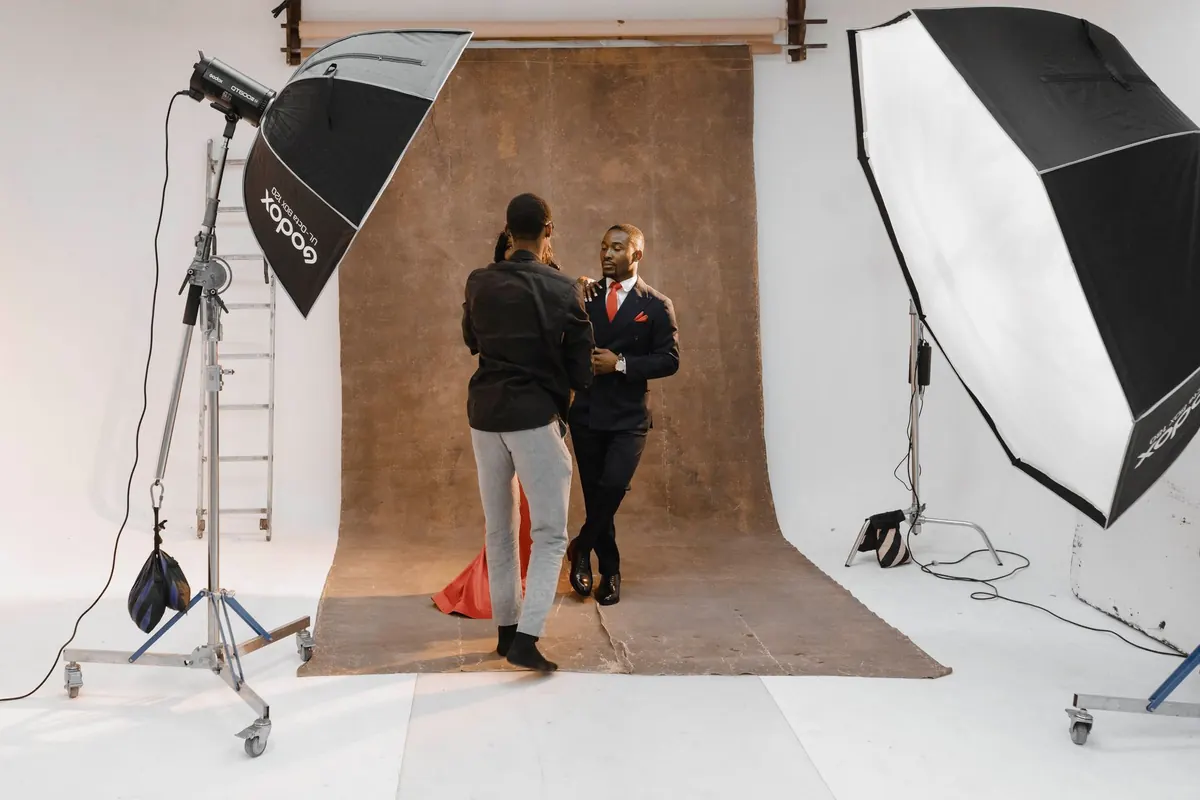
Flash has its own signature. On-camera flash aimed straight ahead flattens faces; off-camera flash, placed to one side and softened with a modifier, can shape a cheekbone and separate a subject from a busy background. Flash also gives you a repeatable look. Once the light is set, the tenth frame looks like the first. The risk is over-lighting: a face that looks pasted onto the scene because the background falls away or the skin loses texture. A flash portrait in a dim reception hall can look crisp and confident, but it can also erase the warm ambience that made the room worth photographing.
The question of skin and shadow
Natural light tends to wrap. Flash tends to carve. Neither is absolute. A large softbox close to the subject can wrap like a window, and a white reflector in open shade can add the kind of direction that feels flash-like. The difference is usually in the falloff and the catchlight. Look at the eyes: a window catchlight is often rectangular and soft-edged; a round modifier shows a round highlight. These details tell the viewer where the light came from, and that affects the portrait’s believability. If you want the image to feel observed, start with natural light. If you want it to feel constructed, start with flash—or at least bring one along to shape the scene.
Control, Consistency, and the Clock
Natural light is free but not obedient. It changes by the minute at golden hour, shifts when clouds move, and disappears when a building casts a shadow across your spot. That can be part of the appeal; a session that follows the light has a looseness to it. But if you are photographing a family, a group, or a series of headshots that need to match, change is a problem. You may need to move people, wait, or shoot faster than you would like. A family session in a park can turn from soft and glowing to flat and gray in the time it takes to calm a toddler, and suddenly the background is brighter than the faces.
Off-camera flash is predictable. You choose the power, the distance, the modifier, and the angle. You can balance flash with ambient light by adjusting shutter speed, aperture, ISO, and flash output. You can shoot the same setup at noon or at dusk. The trade-off is setup time and attention. A stand can tip in wind; a trigger can misfire; a modifier can be awkward in a small room. Flash also asks you to understand exposure as two systems working together: the continuous light in the scene and the brief burst from the flash. That is not difficult once the pattern clicks, but it is another thing to manage while a client is waiting.
A quick test before you commit
Before you choose, ask:
- How much time do I have to set up and adjust?
- Will the light change during the session?
- Do I need the background to stay visible and balanced?
- Can I move the subject, or am I stuck in one spot?
- What mood do I want: relaxed and environmental, or polished and controlled?
Those answers usually point to a setup faster than a debate about gear. If the schedule is tight and the location is fixed, flash often wins. If the location is beautiful and the light is already doing something interesting, use it.
Read the Room: Background and Environment
Lighting choice is also a background choice. Natural light often keeps the environment in the picture: window frames, foliage, sky, and the small details that tell the viewer where the portrait was made. The challenge is contrast. A subject in open shade against a sunlit street can look separated from the scene, and exposing for the face may blow out the background. You can solve this by moving the subject closer to a darker wall, framing out the brightest patches, or adding a reflector to lift the face while you hold detail behind it. Sometimes the best natural-light decision is simply to turn ninety degrees and let a building shade the background too.
Flash changes the background conversation. It can separate a subject from a busy wall or a dark room, and it can give you enough light to close down the aperture and keep more of the scene sharp. At a wedding reception, a single off-camera flash with a warm gel can match the room’s tungsten glow and keep the tables, candles, and guests visible. Without the gel, the subject looks blue-white against an orange room. The point is not that flash is better; it is that flash lets you decide how much of the room survives in the frame.
Cost, Gear, and the Learning Curve
Natural light is the cheaper place to start. A reflector and a diffuser cost far less than a flash system, and you already own a camera and a lens. You can learn a great deal by watching how light falls across a face at different times of day. The hidden cost is opportunity: if the light is bad and you cannot move the shoot, you may need to reschedule or accept a different look.
Off-camera flash has a higher entry cost and a steeper learning curve. You need a flash, a trigger, a stand, and a modifier, plus spare batteries and a way to secure the stand outdoors. You also need practice with sync speed, flash exposure compensation, and high-speed sync if you want to use wide apertures in bright conditions. None of that is mysterious, but it takes repetition. The payoff is control that natural light cannot always give you, especially indoors, at events, or when the background is much brighter than the subject.
Where the budget really goes
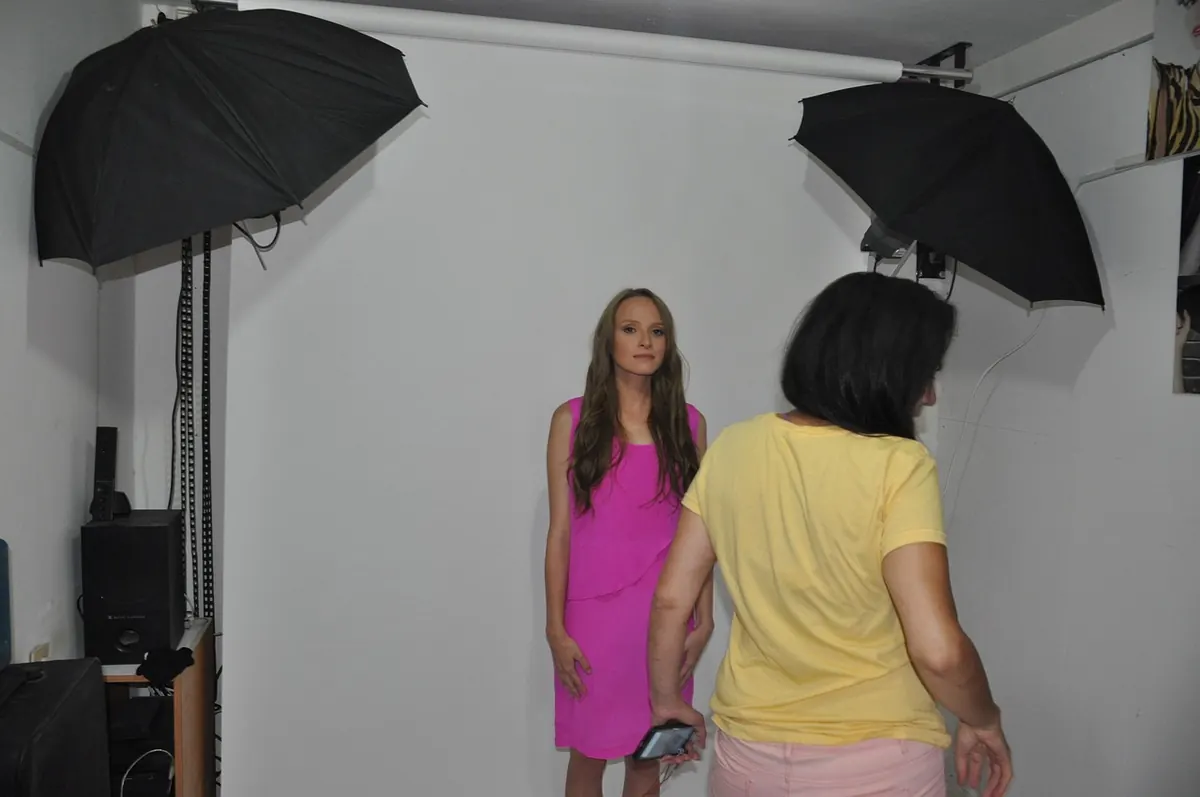
A single flash and a white umbrella can do a lot. Before buying more lights, learn to use one light well: place it, feather it, move it closer, and watch how the shadows change. A reflector is often the better second purchase because it fills shadows without adding another flash to manage. From there, add a second light only when you can name the job it will do—a hair light, a background wash, or a rim that separates a dark jacket from a dark wall. Gear bought before that clarity tends to sit in the bag.
A Simple Hybrid Workflow
You do not have to choose one path exclusively. Start with the ambient light and find an exposure that makes the background plausible. Then add flash only as much as you need to shape the face or separate the subject from the scene. A backlit window portrait is a good example: expose for the bright window, then bring in a small flash through an umbrella or diffusion panel to fill the face. The result can look natural because the background still reads as a window, not a white rectangle. If the room is warm and the flash is daylight-balanced, add a gel; if the flash is too obvious, lower its power and move it closer.
Another hybrid approach is to use natural light as the key and flash as the fill. Place the subject near a window, let the window shape one side of the face, and use a low-powered flash with a reflector or diffusion to open the shadow side. You keep the softness and catchlight of the window while gaining control over contrast. Test the flash at the lowest power first. A little fill often does more than a lot, and restraint is what keeps the portrait from looking lit.
Use natural light for the mood and flash for the insurance.
That balance is what most experienced portrait photographers settle into. They read the light they have, decide what the image needs, and add the smallest tool that solves the problem. Natural light may be the key, the fill, or the entire story. Off-camera flash may be the main source, a subtle accent, or an emergency backup when the sun disappears. The right choice is the one that serves the face, the place, and the mood—and the best way to learn that choice is to practice both until the decision becomes instinct.
Photo: alonbluem / Pixabay